Dual-IMSI vs Dual-Modem Routers: A Practical Guide to Resilient Cellular Connectivity
“Always on” isn’t a slogan; it’s a requirement. From EV chargers to retail POS, BMS controllers to CCTV, the conversation has shifted from coverage to resilience. The headline act right now is dual-IMSI (multi-IMSI) — a SIM-side capability that lets a device re-register on a different operator when things go wrong. It’s clever, useful, and often the right answer. It’s also not the same as hardware redundancy and it doesn’t make failover invisible.
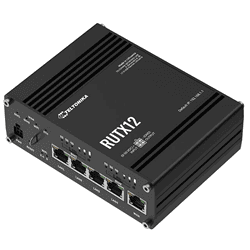
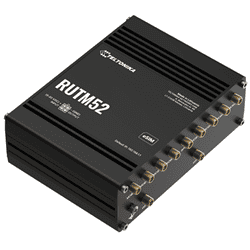
This long-form guide explains dual-IMSI in plain terms, why behaviour differs between suppliers and networks, and exactly where downtime creeps in. Then we contrast it with dual-modem routers (two radios, two live links) using real hardware examples — Teltonika’s RUTX12 (dual LTE Cat 6) and RUTM52 (dual 5G). We include an architecture diagram, a field-tested case study, a buying framework, and clear FAQs. No fluff. Just what you need to set expectations and make resilient choices.
The real-world problem we’re solving
Resilience is what happens when a cellular link fails and the user doesn’t notice. In production, seconds of outage aren’t academic — they’re alarms, abandoned carts, failed transactions, stranded sessions, and weekend callouts. To design for resilience, think in layers:
- Access/RF: antennas, radio paths, local cells, inter-RAT behaviour.
- Identity/attach: IMSI choice, operator core, attach timers, network policy.
- Transport/sessions: IP addressing, NAT, VPN tunnels, how apps survive path and IP changes.
Dual-IMSI mainly influences the identity/attach layer. Dual-modem reinforces access/RF and attach, and gives you more options at the transport layer. That distinction is everything.
Dual-IMSI (multi-IMSI) — what it actually does
The IMSI (International Mobile Subscriber Identity) on your SIM is what the network authenticates. A traditional SIM has one IMSI. A multi-IMSI SIM carries several. If the serving operator becomes unusable (coverage, policy, outage) or a rule prefers another network, the SIM activates a different IMSI and the modem re-attaches to that operator’s core.
Failover sequence (why there’s a gap)
- Device detects failure or poor service on Operator A (e.g., repeated rejects, PDP failures).
- SIM/platform selects IMSI #2 (Operator B).
- Modem detaches from A, attaches to B.
- New PDP/PDN context, new IP address, new NAT state.
- VPN renegotiates; sockets/streams reconnect.
This sequence is sequential and can’t be made atomic on a single modem. On a good day with compatible bands and an open cell, you might see ~10 seconds. With roaming policy, barred cells, or congestion, it can be tens of seconds or more. For metering, fine. For video or payments, visible.
Supplier/network differences that change behaviour
- Where the logic lives: in-SIM applets vs platform-orchestrated switching.
- Profile control: pre-loaded IMSIs only vs OTA-updatable sets for long-life estates.
- Fallback order & timers: aggressive timers reduce downtime but risk flapping; conservative timers slow failover.
- Roaming vs local IMSIs: roamers see different policy/latency to true local profiles.
- Attach policies: operators may rate-limit rapid re-registration during incidents.
Two well-known multi-IMSI approaches
CSL rSIM (security & life-safety heritage). Widely used in UK alarm/security verticals, rSIM maintains multiple IMSI identities and can move between operator cores to preserve service. The value is operational control and proven behaviour in monitored estates. The trade-off is inherent to the model: attach is still a new session with a new IP; applications must tolerate that reconnect.
Eseye (multi-IMSI at global scale). Eseye’s platform uses multiple IMSIs and policy orchestration to deliver broad operator reach, with options for OTA profile management. In practice this reduces truck rolls and avoids operator lock-in. As with all multi-IMSI, re-attach time and IP change are design realities — mitigate at the transport layer.
Where dual-IMSI is the right answer
- Remote telemetry and tracking where a few seconds don’t matter.
- Large fleets needing one SKU across regions/operators.
- Sites where hardware change is undesirable but operator diversity is needed.
Limitations to explain up front
- There is a failover gap (seconds to minutes depending on context).
- IP addresses almost always change; long-lived sessions will reconnect.
- Still a single radio; RF/Modem failure is a single point of failure.
Dual-modem routers — what changes when you add a second radio
A dual-modem router has two independent cellular modules, each with its own SIM/eSIM and RF chain. Both can be attached at the same time — ideally on different operators. Failover becomes a routing decision, not a SIM/profile change. You remove the most time-expensive step (attach).
Advantages
- Radio-level redundancy: if one modem’s RF path is impaired, the other stays up.
- Operator diversity: two different cores = less common-mode failure.
- Near-instant switchover: with hot-standby, sub-two seconds is realistic.
- Parallel links: run active-active with policy-based routing; optionally bond.
Engineering considerations (don’t skip these)
- IP & tunnels: each modem has a different IP/NAT. Use multi-WAN VPNs or an overlay if you need a stable endpoint.
- Antennas: plan for the total MIMO chains (e.g., 2× modems × 2 MIMO = 4 connectors minimum). Keep separation and cabling sensible.
- Power/budget: more radios mean higher draw and cost — justified when downtime is expensive.
Architecture, at a glance
Where downtime appears — and how to minimise it
With dual-IMSI
- Detach/attach latency: authentication and attach take real time; cell congestion stretches it.
- IP change: each attach yields a new IP/NAT; expect tunnel and socket renegotiation.
- Timer tuning: aggressive timers cut downtime but risk oscillation; conservative timers avoid flapping but extend outages.
With dual-modem
- Routing cut-over: if both links are up, the router can move traffic immediately (often sub-two seconds).
- Tunnel strategy: run two VPNs (one per WAN) so failover doesn’t include tunnel bring-up.
- ACLs/DNS: if remote endpoints pin to IPs, use overlays or allow both source addresses.
Case study: dual-IMSI vs dual-modem in a retail CCTV & POS site
Site: UK retail store, single cabinet hosting NVR, POS uplink and a maintenance LAN. Primary requirement: continuous video off-site, card authorisations under 3 seconds.
Phase 1 (single modem + multi-IMSI): During a planned Operator-A outage, the SIM switched IMSI and re-attached to Operator-B. Observed gap 18–42 seconds across tests; NVR flagged stream loss; a handful of POS transactions hit retry thresholds. Outcome: service recovered automatically but alarms/noise generated.
Phase 2 (dual-modem router, two operators): Both modems attached; policy routing pinned CCTV to the lowest-latency link; health checks flowed on both paths. When we forced a fail on WAN-A, cut-over took ~1.1 seconds (stream DVR logs showed no visible impact; POS continued uninterrupted). Outcome: no alarms, no lost authorisations.
Lesson: multi-IMSI is an excellent coverage tool and a good starting point. Where service continuity must be invisible to users and monitoring, a second radio is the difference between “fine on average” and “no one noticed”.
Buying guide: choose based on downtime tolerance
| Scenario | Recommended approach | Notes |
|---|---|---|
| Remote telemetry, tolerant of short gaps | Single modem + multi-IMSI/eSIM | Tune attach timers; plan for IP changes. |
| Retail POS, kiosks, ticketing | Dual-modem (e.g., RUTX12) + dual carrier | Run two tunnels; steer health checks separately. |
| CCTV / video walls | Dual-modem 5G (e.g., RUTM52) | Consider bonding/duplication for critical streams. |
| Industrial control / EV charging | Dual-modem + overlay with stable endpoint | Design ACLs; test failover under load. |
Rule of thumb: if ten seconds is acceptable, multi-IMSI alone is fine. If not, step up to dual-modem and design your transport to survive path changes.
FAQ
Does dual-IMSI guarantee zero downtime?
No. The modem must detach and re-attach on a new IMSI/operator. That interrupts traffic and typically changes IP. It’s still far better than being locked to one operator.
How does CSL rSIM differ from a generic multi-IMSI?
rSIM combines multi-IMSI with platform control and is proven in monitored, life-safety estates. The attraction is predictable behaviour and estate-level control. Like all multi-IMSI, re-attach and IP change still occur; design your transport accordingly.
What does Eseye bring to the table?
Global multi-IMSI footprint and policy orchestration, plus OTA profile options. It reduces truck rolls and improves coverage diversity at scale. Transport/session design remains your responsibility.
How fast is dual-modem failover in practice?
With both links attached and policy routing in place, sub-two seconds is typical; our case study measured ~1.1s. If the secondary is dial-on-demand, add its attach time.
How do I keep sessions alive across IP changes?
Use multi-WAN VPNs (one tunnel per modem) or an overlay that abstracts the path. For strict ACLs, whitelist both public IPs or terminate on a concentrator presenting a stable endpoint.
What about antennas and placement?
Count MIMO chains across both modems, use low-loss cables, and separate antenna pairs to reduce coupling. Don’t mix internal paddles and external whips on the same chain.
Bottom line
Dual-IMSI is a smart, elegant tool that removes operator lock-in and boosts coverage without a truck roll. It isn’t seamless and it doesn’t replace a second radio. If outages cost money or reputation, use a dual-modem router, keep both links up, and design your transport so applications shrug when paths change. Most estates use both: dual-IMSI where “good enough” is enough; dual-modem where “no one must notice”.
Peter is Senior Editor at IoT Portal. He’s led field deployments across retail and transport, and writes about cellular, edge networking and operational reliability. When he isn’t testing routers, he’s writing playbooks so you don’t have to learn the hard way.
Sources (names only): Teltonika Networks — RUTX12 product page & datasheet; Teltonika Networks — RUTM52 product page & datasheet; CSL — rSIM product/technical overview; Eseye — Multi-IMSI & eUICC explainer; Operator/vendor technical notes on attach behaviour and roaming policy.
Related reading