

When building connected devices—whether EV charging stations, digital signage, smart vending machines, or medical equipment—engineers often face the same challenge: how to embed reliable, carrier-grade 4G connectivity in a compact, cost-effective way.
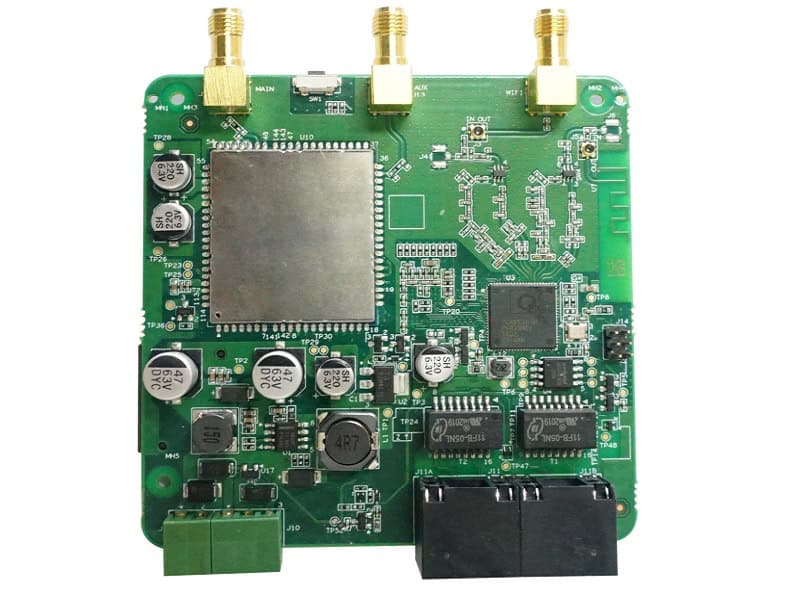
That’s where the Robustel R1511-P Embedded Router PCB comes in. This small but powerful board brings together Ethernet, Wi-Fi, cellular (4G/3G/2G), and serial connectivity (RS-232/RS-485) in a ready-to-deploy module designed for OEMs. Pre-certified for global markets, the R1511-P helps manufacturers fast-track product development while avoiding lengthy (and costly) certification hurdles.
Why Embedded 4G Routers Make Sense
Traditional routers in an enclosure are overkill for many applications where space and cost are at a premium. Embedded boards like the R1511-P let OEMs:
- Build 4G connectivity directly into their product housing.
- Eliminate the need for bulky external routers.
- Maintain flexibility with Ethernet, Wi-Fi, and serial device integration.
- Reduce time-to-market by leveraging Robustel’s pre-certified PCB.
- Tap into RobustOS, a proven Linux-based operating system with a rich SDK and cloud integration via RCMS (Robustel Cloud Management Service).
For OEMs, this means fewer headaches, faster rollouts, and lower total BOM (bill of materials) costs.
Product Variants and Part Codes
The R1511-P series comes in multiple hardware and regional variants, with options for RS-232 or RS-485 serial interfaces. These are listed under different part codes:
- B061713 – R1511-P, RS-232, EMEA+SEA,
- B061714 – R1511-P, RS-485, EMEA+SEA.
- B061715 – R1511-P Eval Kit, RS-232 (includes Wi-Fi, 4G antenna, PSU, terminal blocks, Ethernet cable).
- B061716 – R1511-P Eval Kit, RS-485 (same as above but with RS-485 serial).
From the datasheet, additional variants cover ANZ/LATAM and North America, with matching certification (CE, UKCA, FCC, RCM).
Key Features at a Glance
- Compact PCB form factor for easy integration.
- 2 × 10/100 Ethernet ports (LAN/WAN configurable).
- Wi-Fi 802.11 b/g/n, AP and client modes, WPA3 security.
- 4G LTE, 3G, 2G fallback with global band options.
- 1 × RS-232 or RS-485 serial port with Modbus gateway.
- RobustOS Linux-based OS with SDK for C/C++ apps.
- VPN support: IPsec, OpenVPN, GRE, WireGuard.
- RobustVPN – remote fixed IP service.
- RCMS Cloud – fleet management and OTA updates.
- Industrial design: –25°C to +70°C, 9–36 VDC input.
Typical Applications
The R1511-P is designed for embedded IoT and M2M use cases where reliability, low power consumption, and remote management are essential:
- EV charging stations – secure comms for billing, monitoring, and load balancing.
- Traffic and parking systems – connect smart signs, controllers, and ticketing machines.
- Vending and kiosks – enable cashless payments, inventory reporting, and remote support.
- Healthcare & medical devices – remote monitoring of critical equipment.
- Industrial control – Modbus RTU integration over RS-485 for PLCs and sensors.
- Smart city deployments – compact, rugged, and remotely manageable.
Why SIM Choice Matters: IoT SIM, Roaming SIM, and Private IP
A powerful embedded router is only as good as the SIM card inside it. For OEM deployments, choosing the right SIM type is crucial:
1. Standard IoT SIM (Public IP)
- ✅ Simple setup, plug-and-play.
- ✅ Public IP allows direct access.
- ❌ Security risk—open to the internet.
- ❌ IPs can be blocked by carriers.
2. Private IP IoT SIM
- ✅ Secure, private APN with no exposure to public internet.
- ✅ Ideal for industrial monitoring and CCTV.
- ✅ Works seamlessly with VPN backhaul (OpenVPN/IPsec).
- ❌ Requires VPN or fixed infrastructure to access remotely.
3. Roaming / Multi-Network SIM
- ✅ Avoids single-network blackspots.
- ✅ Perfect for nationwide rollouts (EV chargers, vending, ATMs).
- ✅ Works across borders for logistics/transport use cases.
- ❌ Slightly higher cost than single-network SIMs.
In most cases, OEMs embed multi-network roaming SIMs with private IP—the sweet spot for security, reliability, and remote fleet management.
Full Technical Specifications
(from Robustel datasheet)
Hardware System
- CPU: MIPS 650 MHz
- RAM: 128 MB
- Flash: 16 MB
Cellular Interface
- 4G: LTE FDD/TDD (regional variants)
- 3G: WCDMA
- 2G: GSM
- Antennas: 2 × external SMA-K
- SIM: 1 × Mini SIM (2FF)
Ethernet
- 2 × 10/100 Mbps
- Configurable LAN/WAN
- Isolation: 1.5 KV
Serial
- RS-232 or RS-485
- Baud: 300 bps–115200 bps
- Modbus gateway
Wi-Fi
- 802.11 b/g/n, AP + client
- WPA/WPA2/WPA3
Power
- 9–36 V DC input
- Idle: 1.5 W
- Max: 6 W
Environment
- –25°C to +70°C
- Humidity: 5–95% non-condensing
Software
- OS: RobustOS Linux
- VPN: IPsec, OpenVPN, GRE, WireGuard
- Firewall, DDNS, VLAN, NAT
- SDK: C/C++
Certifications
- CE, UKCA, FCC, RCM (depending on variant).
Final Thoughts
The Robustel R1511-P is more than just a router PCB—it’s a gateway to scalable, secure IoT connectivity. With global certifications, multiple serial/Ethernet/Wi-Fi interfaces, and Robustel’s mature software ecosystem, it gives manufacturers an easy way to add reliable 4G into their products.
Paired with the right IoT SIM strategy—ideally a multi-network roaming SIM with private IP—OEMs can roll out devices at scale without worrying about dead zones, carrier lock-in, or cybersecurity risks.
For manufacturers looking to embed connectivity without reinventing the wheel, the R1511-P is an elegant solution that balances cost, performance, and manageability.