Industrial IoT is moving into an era where connectivity is the weakest link. Devices and platforms are becoming smarter, but without stable, low-latency networks, projects stall. That’s why hardware like the WLINK WL-G535 matters: it’s not just another router, but a platform for secure, long-term IoT deployments.
Designed for Industrial Connectivity
The G535 supports 5G SA (Standalone) and NSA (Non-Standalone) networks, while maintaining backward compatibility with LTE and 3G. For integrators, this means deployments remain usable for years—whether in cities with strong 5G coverage or rural areas still dependent on LTE.
With carrier aggregation, it can deliver up to 3.4 Gbps throughput, keeping pace with high-bandwidth applications like AI video analytics, smart grid monitoring, and connected transport.
Wi-Fi 6 Built In
Industrial networks don’t end at the router. Local devices—sensors, tablets, service laptops—need low-latency access too.
The G535 integrates dual-band Wi-Fi 6 (802.11ax) with speeds up to 1.8 Gbps. That means multiple devices can connect without congestion, even in environments with hundreds of active clients.
Interfaces for IoT Integration
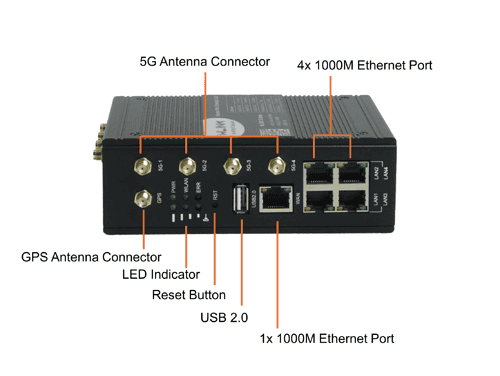
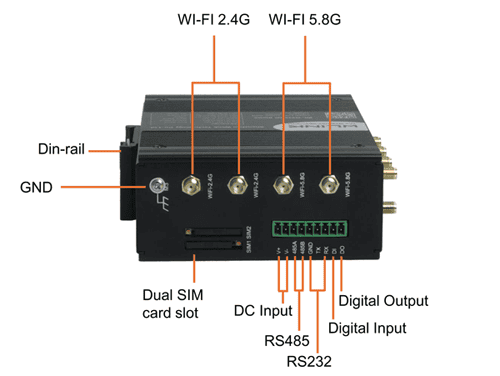
Where many 5G routers stop at Ethernet and Wi-Fi, the G535 adds industrial I/O flexibility:
- 5 × Gigabit Ethernet
- RS-232 + RS-485 serial ports
- Programmable DI/DO for direct sensor/actuator control
This makes it as useful in a factory automation line as in a roadside cabinet for ITS deployments.
Security and Resilience
Every IoT deployment is a target. The G535 responds with enterprise-grade security baked into the OS and hardware:
- VPNs: IPsec, OpenVPN, DMVPN, L2TPv3
- Firewall + ACL for granular access control
- Dedicated encryption engine to handle secure tunnels at full speed
The fanless, rugged chassis is built for continuous 24/7 uptime in harsh environments.
Cloud Management
Managing fleets of routers is often the hidden cost of IoT rollouts. WLINK addresses this with a cloud management platform offering:
- Remote provisioning and updates
- Real-time performance monitoring
- Centralised control for distributed networks
This aligns well with integrators deploying hundreds or thousands of units across different sites.
Where It Fits
The G535’s feature set makes it a candidate for:
- Smart utilities (grid, metering, renewables)
- Industrial automation (SCADA, PLC connectivity)
- Transport & logistics (ITS, connected vehicles)
- Security & surveillance (remote CCTV, AI video)
- Public safety systems (portable command and control)
Key Technical Specs
| Feature | Detail |
|---|---|
| Cellular | 5G SA/NSA + LTE/3G fallback |
| Max Throughput | 3.4 Gbps (theoretical) |
| Processor | Quad-core ARM Cortex-A53, 1.8 GHz + hardware encryption |
| Wi-Fi | Dual-band Wi-Fi 6 (802.11ax), up to 1.8 Gbps |
| Ethernet | 5 × Gigabit |
| Serial | 1 × RS-232, 1 × RS-485 |
| Digital I/O | Programmable DI/DO |
| OS | WLINK OS, optional OpenWrt-based OS |
| Security | IPsec, OpenVPN, DMVPN, L2TPv3, firewall, ACL |
| Management | Cloud platform for remote config/monitoring |
IoT Portal Insight
The WL-G535 isn’t about ticking feature boxes. It represents the shift from consumer-style routers to infrastructure-grade IoT networking equipment—routers that carry industrial interfaces, integrate cloud control, and sustain high-throughput 5G in real deployments.
For organisations moving critical workloads onto cellular, it’s exactly the type of hardware that keeps IoT reliable when it matters most.
Industrial 5G Router Comparison
| Feature / Model | WLINK G535 | Teltonika RUTX50 | Robustel R5020 |
|---|---|---|---|
| Cellular | 5G SA/NSA, fallback to 4G/3G | 5G NSA (SA support via firmware), LTE Cat 20 fallback | 5G SA/NSA, fallback to LTE Cat 20 |
| Max Throughput | ~3.4 Gbps (theoretical) | DL up to 3.3 Gbps / UL 900 Mbps | DL up to 3.4 Gbps / UL 900 Mbps |
| Processor | Quad-core ARM Cortex-A53 @1.8GHz + hardware crypto | Quad-core ARM Cortex-A53 @717MHz | Quad-core ARM Cortex-A53 @1.8GHz |
| Wi-Fi | Dual-band Wi-Fi 6 (802.11ax), up to 1.8 Gbps | Dual-band Wi-Fi 5 (802.11ac, 2×2 MIMO) | Dual-band Wi-Fi 5 (802.11ac, 2×2 MIMO) |
| Ethernet Ports | 5 × Gigabit | 5 × Gigabit | 5 × Gigabit |
| Serial Interfaces | RS-232 + RS-485 | None (Ethernet only) | RS-232 + RS-485 |
| Digital I/O | DI/DO supported | None | 1 × DI, 1 × DO |
| Operating System | WLINK OS (optional OpenWrt-based) | RutOS (OpenWrt-based, mature ecosystem) | RobustOS Pro (Linux-based, app store) |
| VPN & Security | IPsec, OpenVPN, DMVPN, L2TPv3, ACL, Firewall | IPsec, OpenVPN, GRE, WireGuard, Firewall | IPsec, OpenVPN, GRE, DMVPN, Firewall |
| Management | WLINK Cloud platform | Teltonika RMS (Remote Management System) | Robustel RCMS (Cloud Management) |
| Notable Strengths | Wi-Fi 6, industrial serial ports + DI/DO, high CPU power | Mature ecosystem, huge user base, stable firmware, excellent RMS | Strong cloud app ecosystem, multiple firmware profiles, wide-band 5G |
| Typical Use Cases | Industrial IoT (SCADA, smart grid, automation), transport, security | Enterprises, installers, wide IoT deployments, managed fleets | OEMs, transport, integrators needing app-based customisation |
Quick Analysis
- WLINK G535 → Best suited for industrial deployments needing serial integration (SCADA/PLC) and Wi-Fi 6 for dense environments. Strong on raw hardware and interfaces.
- Teltonika RUTX50 → The most installer-friendly thanks to RutOS and the widely adopted RMS platform. The choice when stability, support, and ecosystem matter more than cutting-edge specs.
- Robustel R5020 → A middle ground with strong hardware (close to G535) and an app-driven OS, making it attractive to integrators who want modular firmware and long-term flexibility.
Antenna & Cable Options
A 5G router like the WLINK G535 is only as good as the signal it receives. In challenging environments—remote locations, roadside cabinets, or dense industrial sites—an external antenna setup can make the difference between an unstable connection and a rock-solid link.
That’s where MastLink comes in. Designed for industrial and professional use, MastLink provides:
- 5G and 4G antennas optimised for routers like the G535
- Directional and omni-directional options for different deployment scenarios
- Low-loss coaxial cables to ensure maximum performance from mast to router
👉 Explore antenna and cable solutions at MastLink.co.uk.
Related reading