Two trends heading for the same box
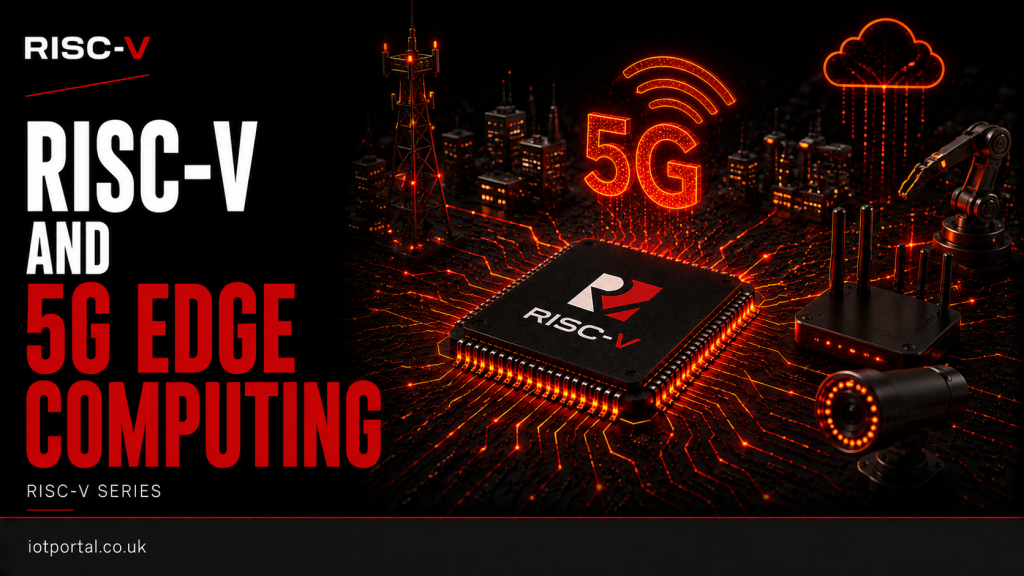
RISC-V 5G edge computing is where two threads running through this whole series finally meet. One is compute moving out to the edge, carried by open RISC-V silicon. The other is connectivity moving out to the edge, carried by 5G. The interesting hardware is the box where both land at once: local intelligence with a cellular link sized for the job.
What “5G edge computing” actually means
Strip away the marketing and edge computing is a simple idea: do the work near where the data is, instead of hauling everything to a distant datacentre. 5G edge computing adds the network half of that, pushing compute out toward the base station and the on-premises node so the round trip is short and the latency low. The formal name is multi-access edge computing, and the point is that the network and the compute stop being separate concerns and start converging on the same spot.
Two things make this more than a slogan. First, 5G Standalone brings features like network slicing and ultra-reliable low-latency communication, so an edge application can get a dedicated, predictable slice of the network. Second, the compute at that edge has to be cheap, low-power and capable, which is exactly the brief RISC-V has spent this series answering.
RedCap: 5G sized for IoT, not for phones
Here is the connectivity problem RedCap solves. Full-fat 5G is designed to stream 4K to a flagship phone, and it is expensive and power-hungry to match. Bolt that onto a sensor or a modest gateway and you are paying for capability the device will never use. For years the answer was to stay on LTE, but 4G is ageing and its spectrum is being eyed for refarming.
Reduced Capability 5G, 5G RedCap, is the right-sized middle tier. It strips the 5G radio down, narrower bandwidth, fewer antennas, no carrier aggregation, so the modem costs less and sips power, while still sitting on the 5G Standalone core and its slicing and low-latency features. The lower-power step below it, eRedCap, goes further still, aiming to replace the LTE Cat-1 modems in the world’s meters, trackers and terminals. It is the connectivity companion to RISC-V’s compute, the link that carries only what the edge decides is worth sending.
Why compute and connectivity belong together
Put the two halves in one box and the logic clicks. A RISC-V gateway runs the local models, distils a torrent of sensor and camera data down to a handful of events, and then a RedCap radio carries just those events over cellular. The heavy lifting stays local on open silicon, and the network only ever sees the conclusions. You get the responsiveness of on-device edge AI and the reach of cellular, without paying full 5G prices for either.
The convergence in one line: the edge box no longer has to choose between being smart and being connected. RISC-V gives it the local compute, RedCap gives it a link sized for IoT rather than for streaming video, and both are built on right-sized, open-leaning foundations instead of the maximal, expensive option.
The cellular IoT tiers
| Tier | Rough peak rate | Best for |
|---|---|---|
| LPWA (NB-IoT, LTE-M) | Kilobits to low Mbps | Ultra-low-power sensors, meters |
| eRedCap (Release 18) | Around 10 Mbps down | LTE Cat-1 successor: trackers, telemetry |
| RedCap (Release 17) | Up to around 220 Mbps | Mid-tier IoT, gateways, cameras, wearables |
| Full 5G (eMBB) | Gigabit-class | Phones, fixed wireless, video |
Most RISC-V edge nodes land in the middle two rows. That is the sweet spot: enough bandwidth to matter, little enough cost and power to deploy at scale, and the 5G core underneath for slicing and reliability.
Where it is heading
The clearest sign of the convergence is that the module vendors are now opening up the processors inside their cellular modems, letting developers run application firmware on the radio module itself. That is compute and connectivity collapsing into a single compact part, exactly the direction an open, embeddable compute architecture is built to ride. RedCap adoption is well past pilot stage now, with more than forty operators across twenty-five-plus countries investing and live services in several major markets.
For the IoT builder, the takeaway is practical. You can now put real intelligence and real cellular connectivity into a small, affordable, low-power node, without over-buying on either axis. That is the intelligent edge becoming deployable at scale, which is the argument the RISC-V and IoT cornerstone has been building toward all along.
Last updated 23 August 2026. Sources: 5G RedCap (Reduced Capability, NR-Light) defined in 3GPP Release 17, up to 20 MHz bandwidth and around 220 Mbps peak, on the 5G Standalone architecture, per 3GPP and GSA; eRedCap in Release 18 caps peak downlink around 10 Mbps to succeed LTE Cat-1, with modules shipping from 2026, per GSA and industry sources; 40-plus operators across 25-plus countries investing in RedCap as of mid-2026, with live services in the US, Germany, Japan, Singapore, Spain and the UAE, per GSA. Omdia’s figure of around 18% of cellular module shipments by 2030 for eRedCap is a projection.